

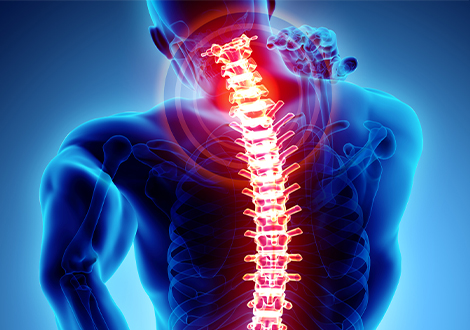
Any part of your neck – muscles, bones, joints, tendons, ligaments, or nerves – can cause neck problems. Neck pain is very common. Muscle strain or tension often causes neck pain. The problem is usually overuse, such as from sitting at a computer for too long. Sometimes you can strain your neck muscles from sleeping in an awkward position or overdoing it during exercise. Falls or accidents, including car accidents, are another common cause of neck pain. Whiplash, a soft tissue injury to the neck, is also called neck sprain or strain.
Common Neck Injuries
-Neck sprain or strain: A sprain can happen when ligaments in the neck are torn. A strain refers to a torn muscle or tendon. This can occur as a result of a sudden injury during physical activity or even a minor car accident.
-Stiff muscles and tendons: Often called a crick in the neck, stiffness can be caused moving awkwardly or keeping the neck in the same position for a long period of time (like sleeping overnight).
-Herniated Disc: A herniated disc occurs when a spinal disc becomes torn and the soft jellylike interior leaks or bulges out of the disc. Most commonly a result of wear and tear, herniated discs can also be caused by a sudden injury, including a fall.
-Pinched Nerve: Bone, tissue or tendons can push against surrounding nerves, which causes pain. This can happen as a result of a muscle sprain or strain.
-Fractured cervical spine: Though rare, a fractured cervical spine (or broken neck) is a serious condition that requires immediate medical attention.
Symptoms
-Difficult turning the neck
-Headaches
-Muscle spasms in the neck and shoulder
-Neck pain
-Stiffness in the neck
-Weakness in the legs, arms, hands or fingers