Common Knee Problems
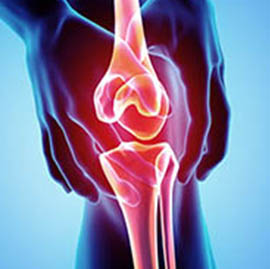
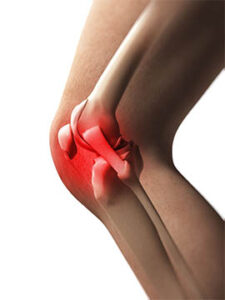
Many knee problems are a result of the aging process and continual wear and stress on the knee joint (such as, arthritis). Other knee problems are a result of an injury or a sudden movement that strains the knee. Common knee problems include the following:
Sprained or strained knee ligaments and/or muscles. A sprained or strained knee ligament or muscle is usually caused by a blow to the knee or a sudden twist of the knee. Symptoms often include pain, swelling, and difficulty in walking.
Torn cartilage. Trauma to the knee can tear the menisci (pads of connective tissue that act as shock absorbers and also enhance stability). Cartilage tears can often occur with sprains. Treatment may involve wearing a brace during an activity to protect the knee from further injury. Surgery may be needed to repair the tear.
Tendonitis. Inflammation of the tendons may result from overuse of a tendon during certain activities such as running, jumping, or cycling. Tendonitis of the patellar tendon is called jumper’s knee. This often occurs with sports, such as basketball, where the force of hitting the ground after a jump strains the tendon.
Arthritis. Osteoarthritis is the most common type of arthritis that affects the knee. Osteoarthritis is a degenerative process where the cartilage in the joint gradually wears away. It often affects middle-age and older people. Osteoarthritis may be caused by excess stress on the joint such as repeated injury or being overweight. Rheumatoid arthritis can also affect the knees by causing the joint to become inflamed and by destroying the knee cartilage. Rheumatoid arthritis often affects persons at an earlier age than osteoarthritis.
How are knee problems diagnosed?
In addition to a complete medical history and physical exam, other tests for knee problems may include:
X-ray. This test uses invisible electromagnetic energy beams to make images of internal tissues, bones, and organs onto film.
Magnetic resonance imaging (MRI). This test uses large magnets, radiofrequencies, and a computer to make detailed images of organs and structures within the body; can often determine damage or disease in a surrounding ligament or muscle.
Computed tomography scan (also called a CT or CAT scan). This test uses X-rays and computer technology to make horizontal, or axial, images (often called slices) of the body. A CT scan shows detailed images of any part of the body, including the bones, muscles, fat, and organs. CT scans are more detailed than general X-rays.
Arthroscopy. A minimally-invasive diagnostic and treatment procedure used for conditions of a joint. This procedure uses a small, lighted, optic tube (arthroscope), which is inserted into the joint through a small incision in the joint. Images of the inside of the joint are projected onto a screen; used to evaluate any degenerative or arthritic changes in the joint; to detect bone diseases and tumors; to determine the cause of bone pain and inflammation.
Radionuclide bone scan. A nuclear imaging technique that uses a very small amount of radioactive material, which is injected into the patient’s bloodstream to be detected by a scanner. This test shows blood flow to the bone and cell activity within the bone.