

The anatomical structures of the shoulder are all highly interconnected. So much, in fact, that shoulder injuries rarely affect just one area of the joint. A single shoulder injury can affect multiple muscles, ligaments, cartilage areas, tendons, and bones.
Unfortunately, injuries are most likely to occur in those who rely on their shoulder the most—over-head athletes. Shoulder injuries are exceedingly common among athletes, especially those who compete in baseball, swimming, tennis, and football. This is often due to the repetitive workouts and intense competition that high-performance athletes endure.
Shoulder injuries, of course, are not limited to athletes. Professionals who frequently use their shoulder—such as those involved in painting, yard care, or construction—experience a higher risk of injury as well.
No matter how a shoulder injury occurs, everyone wants the same result: a fast recovery.
Shoulder Anatomy
The shoulder is the most mobile joint in the body. It consists of three bones: the humerus, scapula, and clavicle. It also consists of many muscles and tendons that hold the shoulder bones in place and stabilize the arm through its full range of motion. The four major muscles and tendons of the shoulder come together to form the rotator cuff.
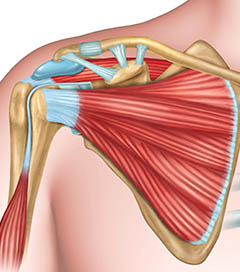
Rotator Cuff Tears
A rotator cuff tear occurs when any tendon of the rotator cuff rips, either partially or completely. Rotator cuff tears are among the most common types of shoulder injuries.
Rotator cuff tears are most common in people who repeatedly perform overhead motions. These tend to be people with active jobs—such as construction workers—or athletes, though anybody can end up with a rotator cuff tear whether they’re active or not.
Rotator cuff tears vary in severity from partial- to full-thickness tears, with partial tears being far more common. It’s possible for a patient to have a partial-thickness rotator cuff tear without even realizing it.
Shoulder Impingement
Shoulder impingement occurs when one or more rotator cuff tendons get trapped and pinched between shoulder bones during arm movement, causing extreme pain and swelling/inflammation of the rotator cuff.
Shoulder impingement is most common in people who participate in physical activities requiring repeated overhead movements—again, mostly athletes. Swimmers, softball players, basketball players, tennis players, and golfers are all high risk for impingement. In fact, shoulder impingement is so common in swimmers that it has the nickname “swimmer’s shoulder.”
Physical Therapy
In the majority of instances, an orthopaedist will recommend physical therapy as part of the patient’s treatment plan. Which makes patients great candidates for the NIOS Procedure.